



Global and local industry insiders gathered for the second annual Hong Kong Fashion Fest; here are our takeaways.
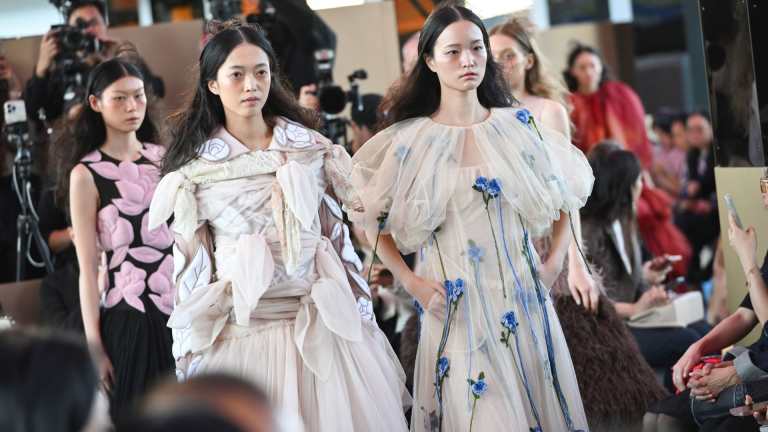
There is no comprehensive discussion of the global fashion economy without mentioning Asia.
The region has long been a crucial industry player, particularly in terms of retail and manufacturing. This year, both established and emerging APAC markets, including India, Japan, Indonesia and Thailand, were reported as top priorities for fashion executives. But the Chinese market, usually reliable as a top source of revenue for luxury brands, has made numerous headlines declaring it a victim of consumers’ declining demand for luxury (though analysts are hopeful its luxury scene is positioned for a slight turnaround in 2026).
Hong Kong is also a key player in both the Chinese and global fashion markets. The region is considered a bridge between Eastern and Western fashion, often serving as an entry point for international brands looking to expand in the Asian market.
In recent years, the city has put in substantial efforts to promote its own garment industry and position itself as a premier style capital. On Nov. 22, the Government of the Hong Kong Special Administrative Region, spearheaded and sponsored by the Cultural and Creative Industries Development Agency (CCIDA) of the Culture, Sports and Tourism Bureau, kicked off the second annual Hong Kong Fashion Fest. The two-week event showcases the city’s dynamic fashion scene through interactive programs, innovative exhibitions and cross-cultural runway shows.
A group of international press was invited to experience a week of the festivities, where we met up-and-coming local designers, spoke to global couturiers and had guided tours of one-of-a-kind art installations.
Ahead, discover the key takeaways from the week.
Platforming Global Designers
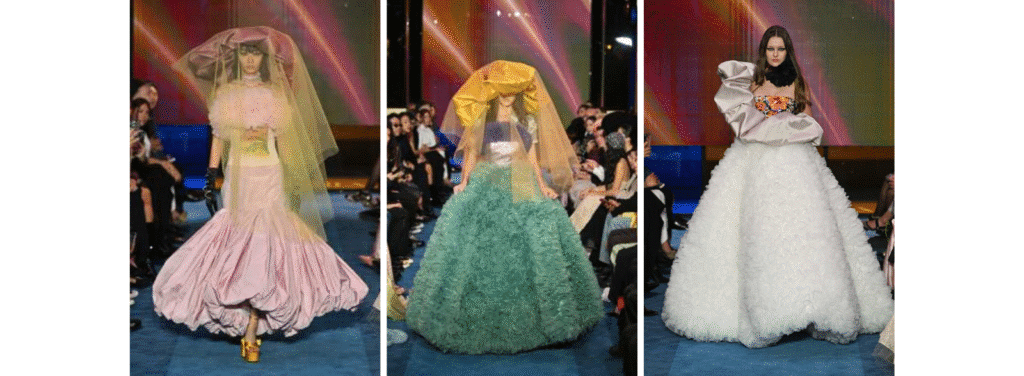
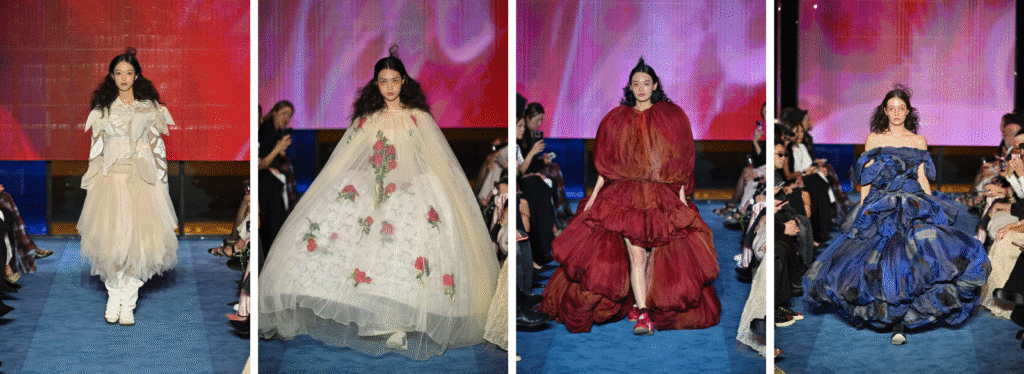
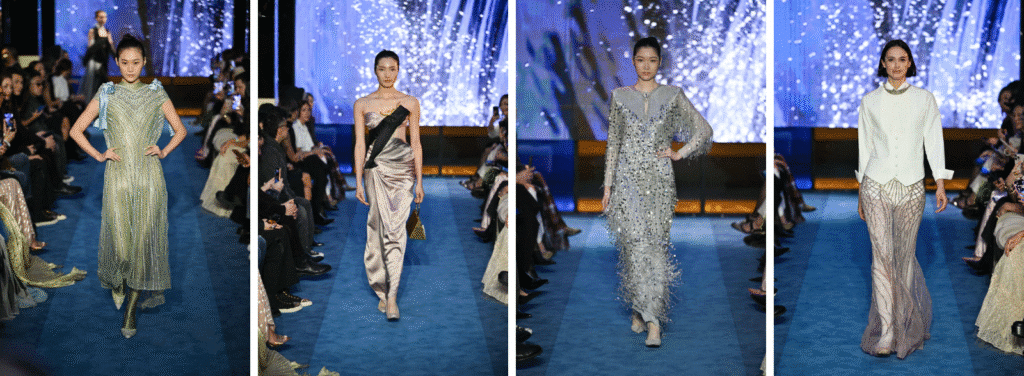
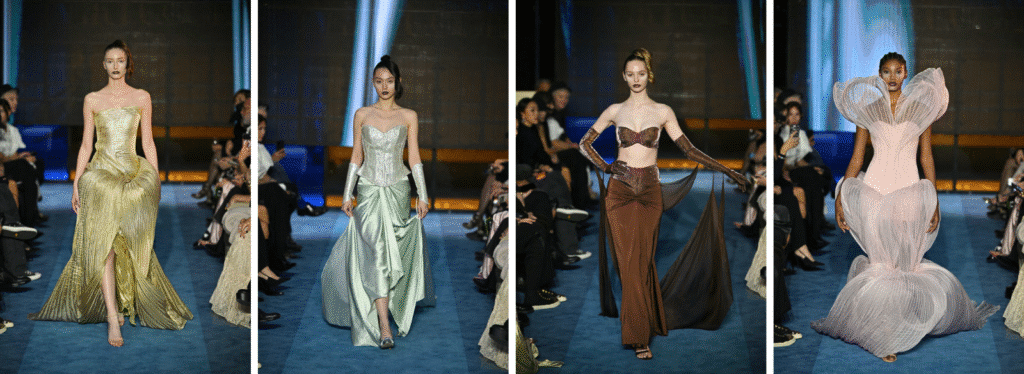
The event kicked off with Virtouse: The Artistry of Couture, a runway show spotlighting emerging international couturiers. This year’s lineup included Peet Dullaert from France, Tomo Koizumi from Japan, Zhaoyi Yu from the Chinese Mainland and Caroline Hu from Hong Kong. Against the picturesque Victoria Harbor, each designer unveiled 10 couture pieces, balancing craftsmanship, culture and elegance.
Yu was inspired by the changing forms of light when it travels, which took shape via sculpted gowns crafted from glossy silks, semi-opaque tulles and seashell embellishments. Meanwhile, Koizumi presented a wedding dress line filled with colorful, voluminous, ruffled gowns; Hu brought to life an oil painting-inspired collection of whimsical, avant-garde designs; and Dullaert translated the idea of city living and how people move through life into a glitzy, crystal-adorned presentation.
Though each designer had their own reasons for participating in the showcase, there was a shared consensus that this was a worthwhile business opportunity.
For Koizumi, participating in the show presented a unique chance to introduce his brand to a new audience. “I’m really looking for a new opportunity to explore the wedding business, especially in the Asian market,” he shared. “I think Hong Kong was the perfect place to show this collection because the people here have a unique aesthetic, and I really love that.”
Dullaert’s ready-to-wear already has an established presence in Hong Kong, but Virtouse enabled the French brand to showcase its couture line to clients. The designer also hoped to dispel the myth that haute couture can only live in Western fashion hubs.
“For me, it was an important factor in bringing myself close to the people and showing what we actually make in person,” Dullaert explained. “To be able to see it closer here and not only in the setting of Paris. Fashion is very international, [especially] for haute couture. Haute couture is such a limited market, but its [craft] is very global. It’s important to show the fact that couture doesn’t necessarily need to be [solely shown] in the traditional places like London, Paris or Milan.”
Supporting Local Talent
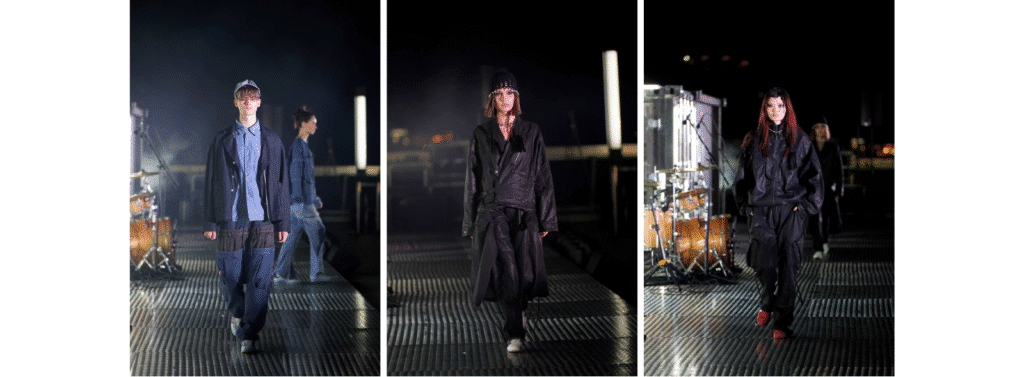
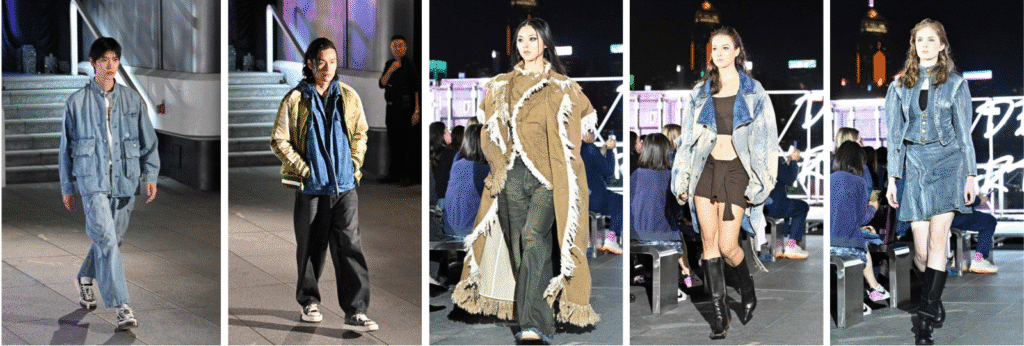
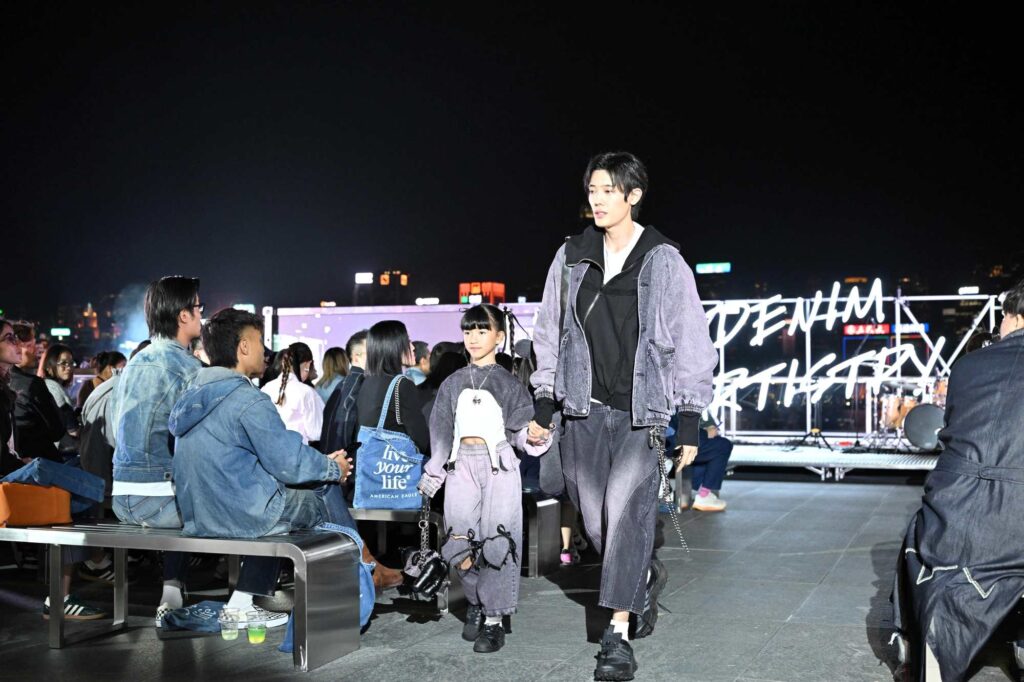
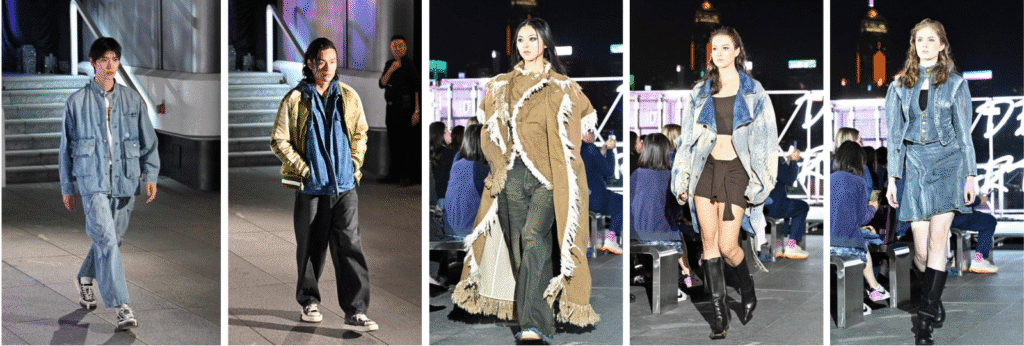
This year, there was an even more substantial effort to boost local talent. That led the Hong Kong Design Institute (HKDI) to include its fourth annual Hong Kong Denim Festival (HKDF) as part of this year’s Fashion Fest programming. Themed “Denim Artistry,” the program featured cross-disciplinary partnerships, in-mall exhibitions and a runway showcase for local denim artisans.
For the latter, participating talent included Tsang “Max” Chi Fung, Cheuk “Jasmine” Tsz Fa, Lee “Jason” Kui Kei and Lee “Jesse” Hin Fung. Each designer presented an elevated denim collection by using creative treatments, mixed textiles, recycled materials and innovative technology.
The goal of this high-visibility opportunity is to improve market access for these emerging designers by connecting them with peers, buyers, suppliers and entrepreneurs. (The four designers will also attend a trade show at Paris Fashion Week in March 2026.)
“This denim program is actually a billboard for the younger generation to see how the future of Hong Kong denim is creative,” Hin Fung said. “By working closely with the factory and major denim fabric suppliers, we can exchange ideas and learn from each other. It’s a very unique experience for all the fashion designers. Also, I think that what is unique about this program is it’s not just about putting a show together, but we are also now at different places in Hong Kong and selling our product.”
Pushing for Sustainability
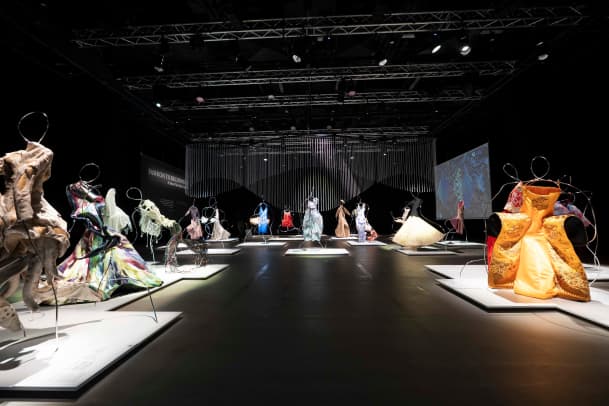
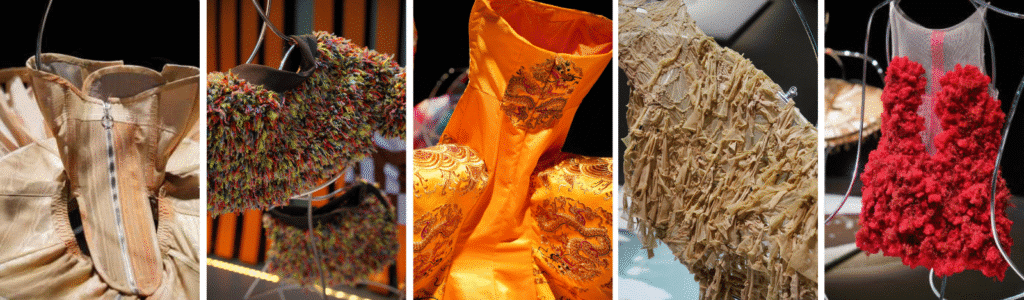
As an ongoing hot topic globally, sustainability was unsurprisingly the subject of dedicated programming at Hong Kong Fashion Fest. Beyond the upcycled denim event, Fashion Fest attendees enjoyed “Fashion to Reconnect: A Tale of Two Style Capitals,” a sustainable fashion exhibition hosted in collaboration with Milan Fashion Week.
Spanning the installation space was a unique selection of “sustainable” garments crafted by nine local creatives (including Vivienne Tam, Dorian Ho and Arto Wong) and 15 Italian designers (such as Armani, Missoni, Etro and Max Mara).
“We are lucky because [sustainability] is a big topic worldwide in terms of education,” said Esterina Nervino, assistant professor at City University of Hong Kong. “In Hong Kong, we have one of the most prestigious sustainable awards, which is the Redress Design Award. […] I think that with a collective effort, Hong Kong can truly become a place where sustainability is at the core.”
When selecting which brands to include in the exhibit, the team first considered the parameters for what constitutes “sustainable.”
“Fondazione Pistoletto Cittadellarte and [curator] Tiziano Guardini were involved, and the Camera Nazionale della Moda Italiana showed us their own manifesto to actually include their seal of approval on the selection of brands,” she continued. Together, all parties accounted for material use, production processes and environmental impact. They also factored in culture by observing how designers upcycled materials tied to Chinese heritage to give them new life.
“Sustainability is about the process and it’s also about treasuring the heritage, reminding us where we come from and how what we had before could inform the future,” Prof. Nervino said.
Vivienne Tam, a China-born, New York-based designer, jumped at the opportunity to spotlight her work in the exhibit. For her, sustainability meant preserving heritage, which she achieved by employing traditional Chinese elements in a contemporary way: She showed a striking red two-piece that includes a highly ornate, cropped jacket featuring Chinese embroidery, paired with a voluminous pleated skirt.
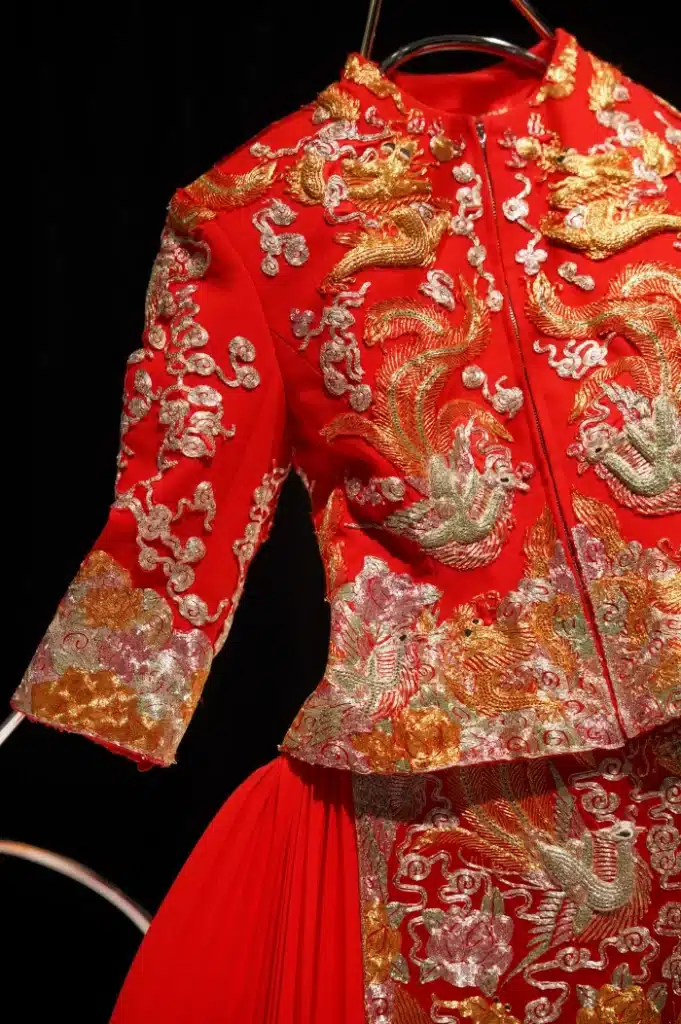
“I really love [thinking about] culture and sustainability together and bringing old craftsmanship,” Tam shared. “[My design] cut away the beautiful, beautiful piece of the embroidery and we engineered it into a new body [of work] to give it a new life. My work is always about transformation and regeneration.”
Overall, the festival was an exciting display of the promising creativity and talent Hong Kong’s fashion scene has to offer. Only time will tell if this will lead to business opportunities (think: wholesale orders, editorial pulls, cross-brand collaborations) for participating labels beyond great press and social media exposure. But the event certainly has all the makings to get more industry attention.